Demand for metals is growing – why recycling alone is not enough?
Professor Mari Lundström stresses that meeting future raw material needs will require new mining operations, recycling and strong technological expertise.
24. November 2026
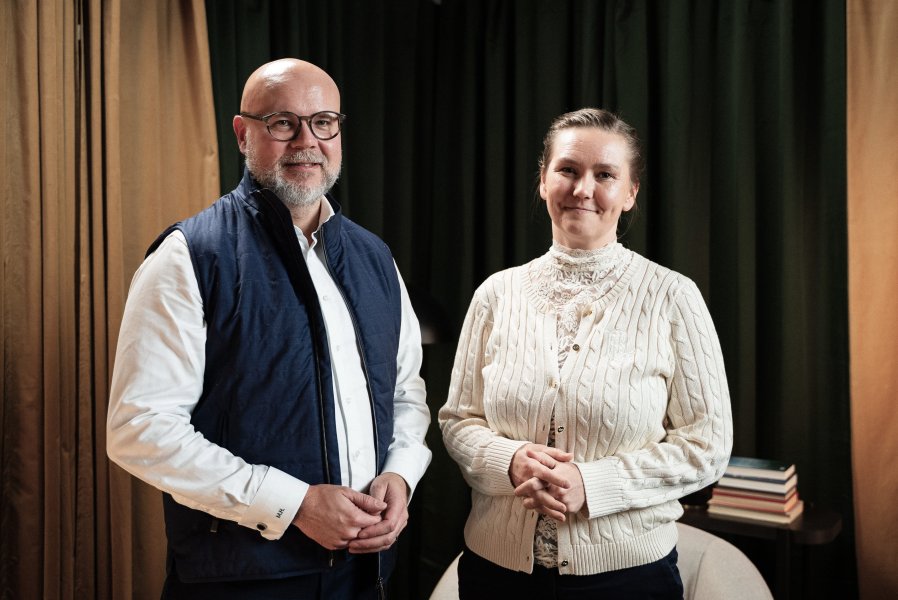
The clean transition, digitalisation and the needs of the defence industry are driving demand for minerals and metals. At the same time, energy storage and production, data centres and the electrification of industry are making metals increasingly important to society.
Mari Lundström, Professor of Hydrometallurgy at Aalto University and the first Finn to receive the Faraday Medal in electrochemistry, believes that public awareness of the importance of metals and the need for mining has increased.
Circular economy alone cannot meet demand
There is no single solution to the growing demand for metals. Lundström stresses that recycling needs to be further developed and process recovery rates improved so that more can be recovered from the raw materials available.
“It is absolutely clear that recycling needs to be developed. However, for a long time to come, it will not be able to meet a significant share of our raw material needs, which means that more mining will also be needed,” Lundström says.
In the case of batteries, for example, recycling is limited by the fact that the materials we will need in the future have not yet reached the end of their life cycle. In addition to new mining operations, better recovery of materials from already mined waste rock is needed, as are technologies based on more widely available raw materials.
Lundström believes that most raw materials could become critical in the future. Europe is particularly vulnerable when important raw materials are not produced within the EU at all, or when global demand increases even for materials in which Europe is more self-sufficient, such as copper.
Finland’s competitive advantage is built on a strong industrial heritage
Finland is well positioned to succeed in the mineral value chain, thanks to its long history of mining, technology development and metallurgical processing. Opportunities for growth lie in building on and updating these established strengths.
“Existing expertise needs to be applied to new raw materials, ore deposits and recycling processes as we seek to expand our technological and production capabilities further along the value chain,” Lundström says.
She also sees Finland’s closely concentrated expertise as an important strength.
“Within a small geographical area, we have a vast number of different production facilities and experts in different metals. This creates a unique opportunity for innovation through knowledge sharing and collaboration,” Lundström says.
Recycling is not a straightforward issue
Recycling processes are complex, and recovering every material is not economically attractive.
Lundström illustrates the challenge with the example of a tablet computer. Of the roughly 45 raw materials it contains, only just over ten can currently be recovered at high recovery rates. Gold and copper, for example, are attractive to recover because of their value, while separating metals present in smaller quantities, such as indium and gallium, requires considerably more effort.
Nor is recycling straightforward when it comes to environmental impacts. The assessment depends on whether the focus is on factors such as carbon footprint, resource depletion or toxicity.
Lundström notes that in the case of batteries, for example, most environmental impacts from recycling are lower than those of primary production. However, as additional process steps are introduced to recover an increasing number of materials, a point may be reached where, for example, the carbon footprint exceeds that of corresponding primary production.
Attitudes have already changed
To secure the industry’s growth, new experts are urgently needed alongside collaboration between research and industry. According to Lundström, both industry and educational institutions have an important role to play in informing young people about the opportunities offered by the minerals sector when they are choosing what to study.
“Expertise and research are the engines of growth. But they cannot achieve anything on their own. We also need very close and important collaboration between research and industry,” Lundström says.
More broadly, Lundström believes that attitudes towards the mining industry have changed. When she became a professor 11 years ago, saying that more mines were needed was still considered a radical position. Over time, however, acceptance has increased.
The eleventh episode of our podcast series is titled Recycling alone is not enough – where will the metals of the future come from?
Click here and listen to the episode on our YouTube channel
What did you think of the episode? We welcome your feedback, as well as ideas for topics and guests for future episodes.