Minerals as a driver of Finland's growth
According to Member of Parliament Markus Lohi, Finland should not settle for mining alone but aim to build the entire value chain, creating growth in Finland while strengthening Europe’s raw material self-sufficiency.
23. October 2026
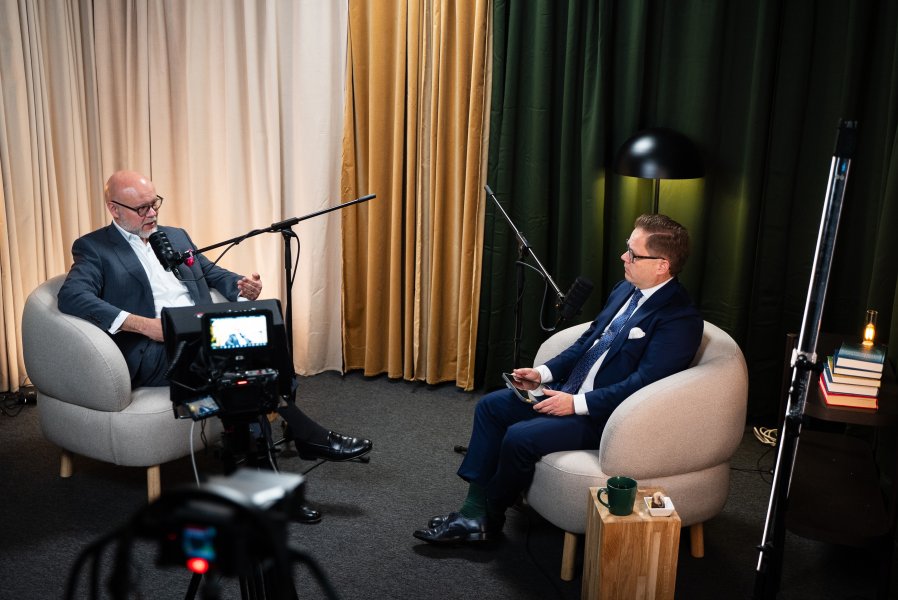
Markus Lohi, Deputy Chair of the Centre Party and Member of Parliament, sees Finland’s mineral resources as a significant opportunity for new industrial growth. In his view, the goal should be to process minerals as far as possible in Finland. This would strengthen Finland’s economy while helping Europe respond to the growing need to reduce its dependence on raw materials produced elsewhere.
Lapland is driving Finland’s growth
Today, Lapland is at the heart of Finland’s economy and rapidly growing industries such as mining. Representing the Lapland constituency, Lohi has had a front-row seat to the region’s changing role.
“I’ve said, somewhat tongue in cheek, that Lapland is the engine of Finland’s growth, while Helsinki is the dining car where people enjoy the fruits of that growth on white tablecloths,” Lohi says.
A strong economy is also essential for maintaining security and the welfare state. Politicians have a responsibility to balance public finances so that companies can focus on building profitable businesses and making industrial investments in Finland.
From mines to finished batteries: aiming for the entire value chain
As Europe seeks to reduce its dependence on external sources of raw materials, Finland is well positioned: it has significant mineral deposits, clean electricity, space for industrial activities and a stable rule-of-law environment. According to Lohi, the optimal scenario would be to keep the entire value chain in Finland.
“The ideal situation would be to have the entire cluster operating in a way that allows us to process materials as far as possible here in Finland. When it comes to raw materials for the battery industry, for example, we could even manufacture finished batteries here,” Lohi says.
According to Lohi, achieving this goal will require courage and choices. Thanks to its strict environmental standards and clean energy production, Finland has an opportunity to distinguish itself globally as a model for sustainable mining.
Unpredictable permitting and regulation are slowing investments
For highly capital-intensive projects to move forward, the investment environment must be stable. Lohi points out that regulatory risks at both the European and national levels are holding back development. As the saying goes, while the US innovates and China copies, Europe regulates.
Lohi sees the unpredictability of permitting as the biggest bottleneck. The quality of the permitting process should not be compromised, but companies need to be able to assess how long the overall process will take.
“I think it would be better to focus on the permitting system as a whole and have one main permit that incorporates the other permits, thereby speeding up the entire process. At the moment, we have several separate permitting processes, which can result in a situation where, even as one permit is about to be granted, others are already expiring,” he notes.
Taxation should not shorten the lifespan of mines
Recent increases in the electricity tax on mines and the mining tax have also sparked debate. According to Lohi, continuous tax increases can become counterproductive, shortening the lifespan of mines and preventing otherwise profitable investments. He therefore calls for a hybrid model that would secure tax revenue for the state without placing an excessive burden on the industry.
Local acceptance, often referred to as the social licence to operate, is also essential. This is typically ensured through municipal-level land-use planning. However, Lohi believes that for exceptionally large projects that are critical to national or European self-sufficiency, a broader national-level procedure could also be considered.
For the industry to succeed in the future, it must also attract new talent. Lohi encourages companies to open their doors to young people.
“Modern mines are technology-intensive workplaces. They are not dusty and dirty places. Giving young people opportunities to learn about the industry could open many eyes.”
The ninth episode of our Mineraalit ja miljardit podcast series is titled Finland’s minerals as a driver of growth – mining, processing and the future of investment. Listen to the episode on FMG’s YouTube channel.
What did you think of the episode? We welcome your feedback as well as ideas for topics and guests for future episodes.