Critical raw materials as pawns in geopolitics
Great powers are competing over mineral value chains, while Europe and Finland seek their place in a new global power struggle.
20. April 2026
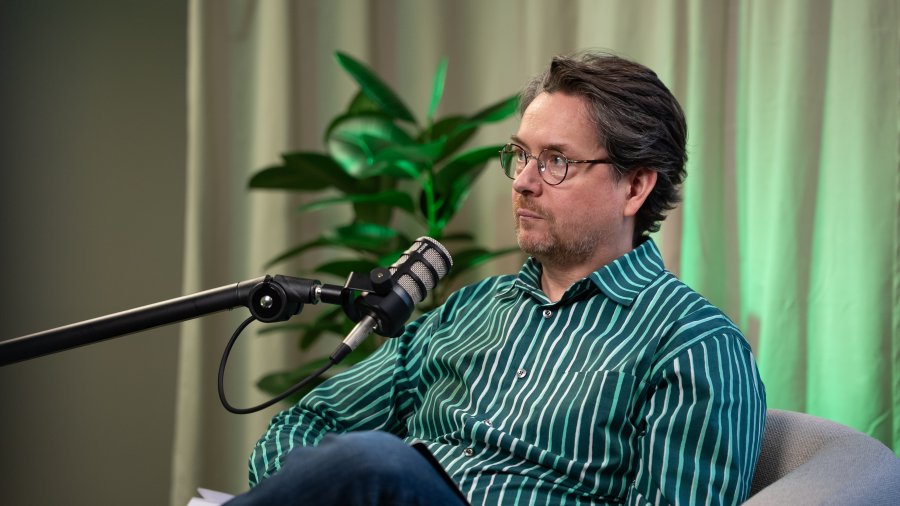
In the third episode of our podcast, we delve into the role of critical raw materials in the global power game and explore how minerals have become instruments of geopolitical leverage. The discussion examines the efforts of major powers to strengthen their positions in mineral value chains and considers the role of Europe and Finland in this shifting landscape.
FMG’s CEO Matti Hietanen is joined by Samu Paukkunen, Deputy Director of the Finnish Institute of International Affairs.
Minerals as a new weapon in the global power game
The rules of the global economy have changed. Much like oil and coal before them, critical minerals have become a tool through which global power is measured.
“The free trade system is broken, and economic dynamics no longer follow the old rules of the game. We increasingly see how geoeconomics influences state decision-making, shapes corporate behaviour, sets countries against one another, and determines what is being contested,” says Paukkunen.
The world is in the midst of an energy transition, shifting away from oil-based systems towards renewable energy and battery technologies. At the heart of this transition are critical raw materials that enable the green transition, renewable energy production, communications technology, the defence industry and electric vehicle manufacturing. These include copper, aluminium, lithium and rare earth elements, among others.
China dominates the production of critical raw materials
Control over the production and processing of critical raw materials gives states significant geopolitical leverage. Historical examples from coal and oil show that those who control key resources also influence prices and gain economic advantage. Today, China holds a leading position in critical raw materials.
Decades ago, China made a strategic decision to invest heavily in renewable energy due to its lack of domestic oil and gas resources, and it does not follow the same production rules as Western countries. This approach is underpinned by long-term strategic thinking, the ability to identify growing sectors early, and the use of strong domestic competition as a driver of technological development. This position of power has also been leveraged as a weapon in trade disputes.
“When dependencies are created, they are almost always used. The rules of the game are unclear, and the playing field is not level,” Paukkunen reminds us.
The United States has now awakened to the situation and is seeking to build strategic autonomy through massive investments and the accumulation of mineral reserves, particularly for defence industry needs. To achieve this, the U.S. is looking for allies among countries with mineral resources or processing capacity. Arctic regions, such as Greenland, are also attracting growing interest from major powers due to their resource potential.
“This is about raw power politics—about who gets to set the terms for future markets, where the green transition is built, where energy is produced and in what form,” Paukkunen notes.
EU ambitions are high – but are the measures sufficient?
Europe, too, is aiming to reduce its dependence on China through the Critical Raw Materials Act (CRMA). The goal is that by 2030, 10% of the EU’s demand for critical raw materials will be mined and 40% processed within Europe, and that no more than 65% of any single raw material will come from one third country.
However, Paukkunen remains cautious about Europe’s ability to compete with heavily subsidised Chinese production. In particular, slow permitting processes and strict environmental criteria in Europe pose challenges when competitors elsewhere may not follow the same standards. For this reason, it is crucial to build multiple alternatives so that Europe does not become dependent on a single actor.
Finland as the EU’s leading mining country
Finland’s position as the EU’s leading mining country, a significant producer of nickel and lithium in Europe, and one of the largest cobalt refiners outside China, creates unique opportunities and strategic importance for us. Domestic production would not only bring economic growth and investment, but also enhance security and room for manoeuvre in foreign and security policy.
“If we were able to strengthen our own resource base and be strategically important to others, that would also increase our freedom and flexibility to act,” Paukkunen reflects.
At the same time, public debate reveals a contradiction: according to Paukkunen, we want to be part of the green transition, but we are not always willing to implement it here at home. He encourages reflection on whether minerals could be produced in Finland more cleanly than elsewhere, while taking local environmental impacts and concerns into account.
Looking ahead: Uncertainty continues
The importance of critical raw materials reaches deep into security policy. NATO has recognised the significance of raw materials and has published a list of the most critical minerals needed by member states to maintain defence capabilities and deterrence.
“When major powers rise and others decline, tensions always follow. It rarely happens without conflict—either indirect or direct. I fear that instability will remain at this level or even worsen. We are already seeing major actors claiming what they consider to be theirs,” Paukkunen assesses.
The third episode of our Mineraalit ja miljardit (Minerals and billions) podcast is titled Critical raw materials at the centre of geopolitics – who controls the minerals of the future? Listen to the full episode on FMG’s YouTube channel.
What did you think of the episode? We welcome feedback and ideas for future topics and guests.